
Home/Resources/Case Study/Energy & Sustainability
5 min. read
Vattenfall operates a district heating network in the Netherlands with ~2,000 heat transfer stations, where control valves and actuators are critical for reliable and efficient heat delivery.
Variations in usage, age, and operating conditions made it difficult to detect degradation early and prioritize maintenance effectively.
Results & Impact
By implementing fleet-wide valve diagnostics, Vattenfall gained continuous visibility into asset behaviour and control performance.
- Identified > €200k/year in potential energy losses caused by control inefficiencies
- Extended asset lifetime by shifting from time-based to usage-based replacement
- Reduced manual inspection effort through continuous, data-driven monitoring
- Detected previously hidden issues in redundant valve setups before failure occurred
- Enabled targeted maintenance through “bad actor” identification across the fleet
The Challenge
Managing thousands of distributed control valves introduced several operational blind spots.
Bypass valve failures often went unnoticed, increasing wear on main valves. At the same time, large differences in valve activity (e.g. 500 vs. 50,000 movements/week) remained invisible without monitoring.
Inefficient control behaviour such as overshoot and hunting led to continuous energy losses, while maintenance remained largely reactive — with issues detected only during inspections or after failure.
The Approach
Vattenfall aimed to transition from reactive maintenance to a data-driven strategy focused on reliability, efficiency, and cost control.
- Detect degradation and valve issues early to prevent delivery disruptions
- Optimize maintenance and replacement based on actual usage (RUL)
- Reduce energy losses by improving control loop performance
- Focus maintenance efforts only where action is required
Solution
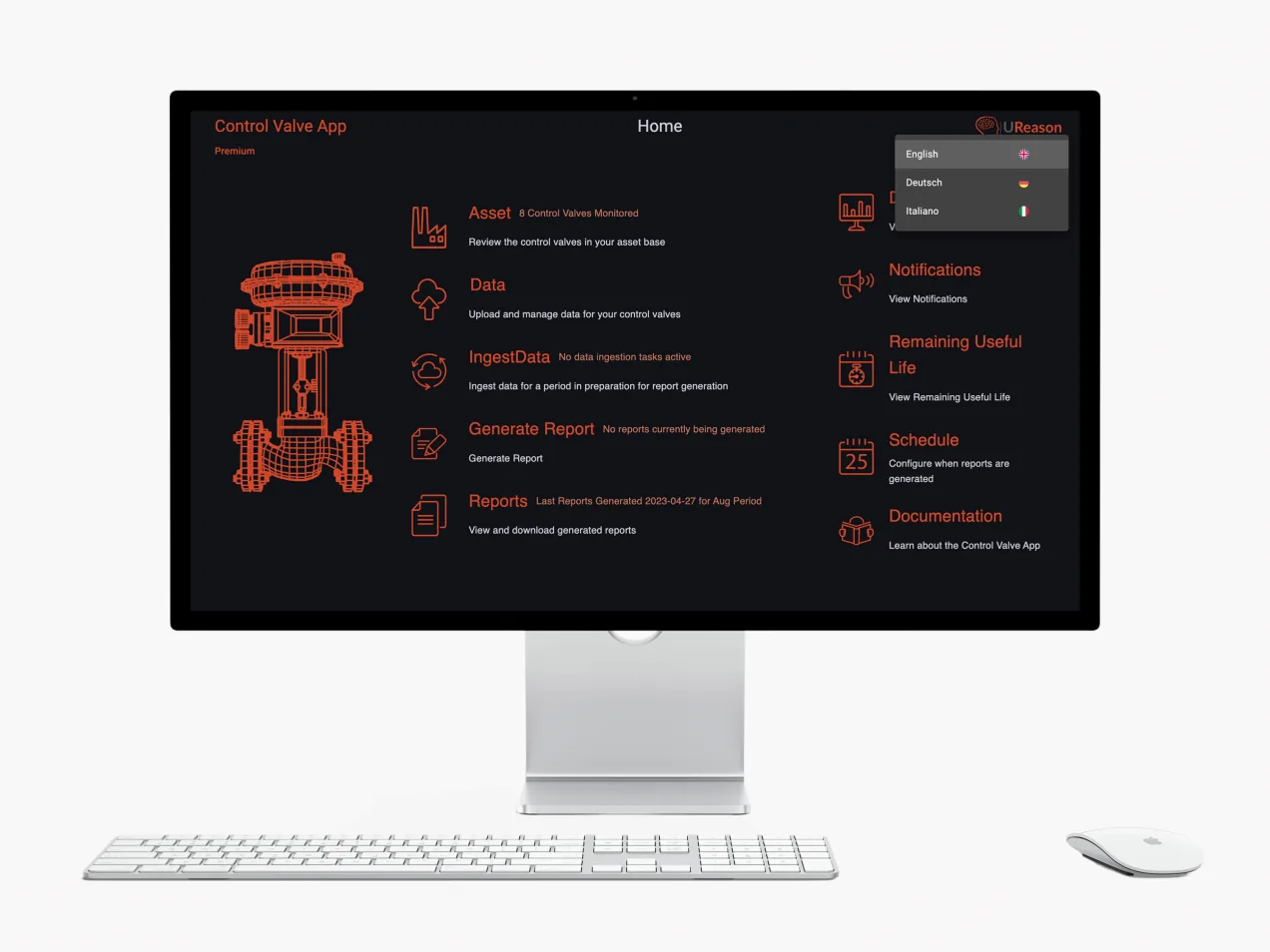
UReason deployed the Control Valve App (CVA) to monitor valve and actuator behaviour across the entire fleet. The platform combines usage-based lifetime modelling, control performance analytics, and anomaly detection to continuously assess asset condition.
Key capabilities include:
- Usage-based lifetime modelling
- Remaining Useful Life (RUL) calculated based on actual valve movements and operating context
- Control performance analytics
- Automatic detection of oscillation, hunting, and overshoot
- Anomaly detection
- Continuous benchmarking against historical behaviour to identify deviations early
Implementation
The solution was implemented using existing infrastructure, without requiring additional sensors.
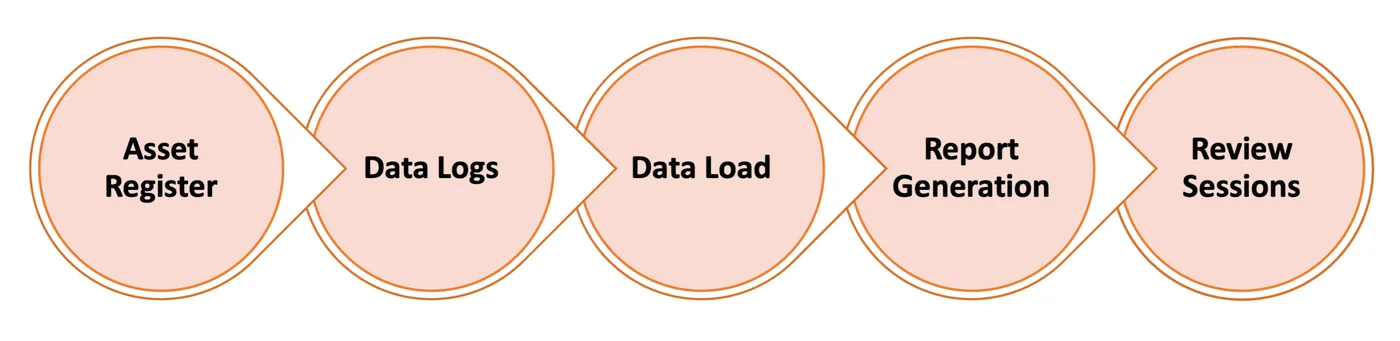
Data from PLCs, historians, and control systems is collected weekly and processed into automated reports. SAP asset data adds context, while a continuous feedback loop with engineers ensures insights remain actionable.
CVA runs diagnostics 24/7, translating raw data into prioritised actions.
What Makes Control Valve App Different
- Understands operational context
Accounts for relationships between main and bypass valves in district heating systems - Usage over age
Identifies assets that are still healthy despite age, avoiding premature replacement - Engineering → financial translation
Converts technical issues (e.g. valve hunting) into quantified energy and cost impact
Example Insights
Valve Health
Visual comparisons of total strokes between redundant assets (e.g., Valve A: 49,637 strokes vs. Valve B: 286 strokes), highlighting imbalance.
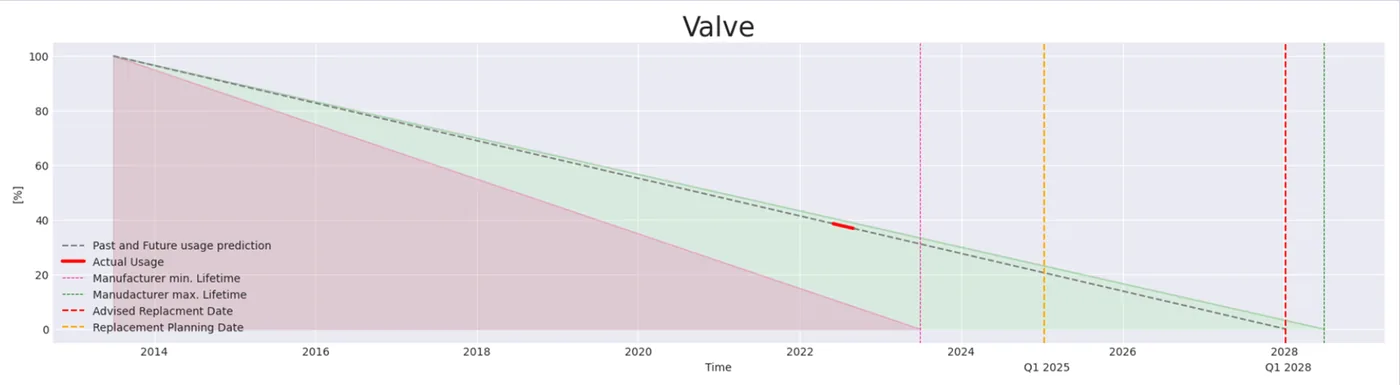
RUL Calculation
Tables showing “Rest of Useful Lifetime” in weeks vs. operational time, allowing for precise replacement planning.
Performance Graphs
Detection of “hunting” behaviour in control loops where the valve constantly oscillates, wasting energy and wearing out the actuator.
The bad-actor list allows us to focus on assets that need attention.
The CVA provides us additional inputs before maintenance projects and peak demand periods.
Detected issues were validated in the field and were not identified with standard testing methods.
Key Learnings
Redundancy is Critical
Even “backup” assets (bypass valves) require active monitoring; their failure silently destroys the primary assets.
Data-Driven Decisions
Replacing assets based on calendar age is inefficient. Data proved that many assets deemed “end of life” were still viable, significantly impacting CAPEX planning.
Knowledge Transfer
The system supports less experienced engineers by providing automated diagnostics and explanations, ensuring consistent knowledge across the team.
Get your copy
To learn more about how the app works, and how to apply it to your own valves, download the brochure below.
Curious how this could work in your setup?
Book a call with Artur Loorpuu, Senior Solutions Engineer at UReason.