In today’s complex industrial landscape, in chemical, power-generation, petrochemical or pharmaceitical, sites are under intense pressure to improve safety, reduce downtime, and unlock operational intelligence. One of the most significant enablers of this transformation is the Digital Product Passport (DPP) — a standardized, rich digital record of an asset that travels with it from the OEM all the way into the heart of your plant operations.
Imagine this: new assets arriving at your gate already equipped with structured digital data that tells you what the equipment is, how it was built, how it should be maintained, and how it fits into digital ecosystems. That’s the promise of DPPs — and it’s already becoming reality.
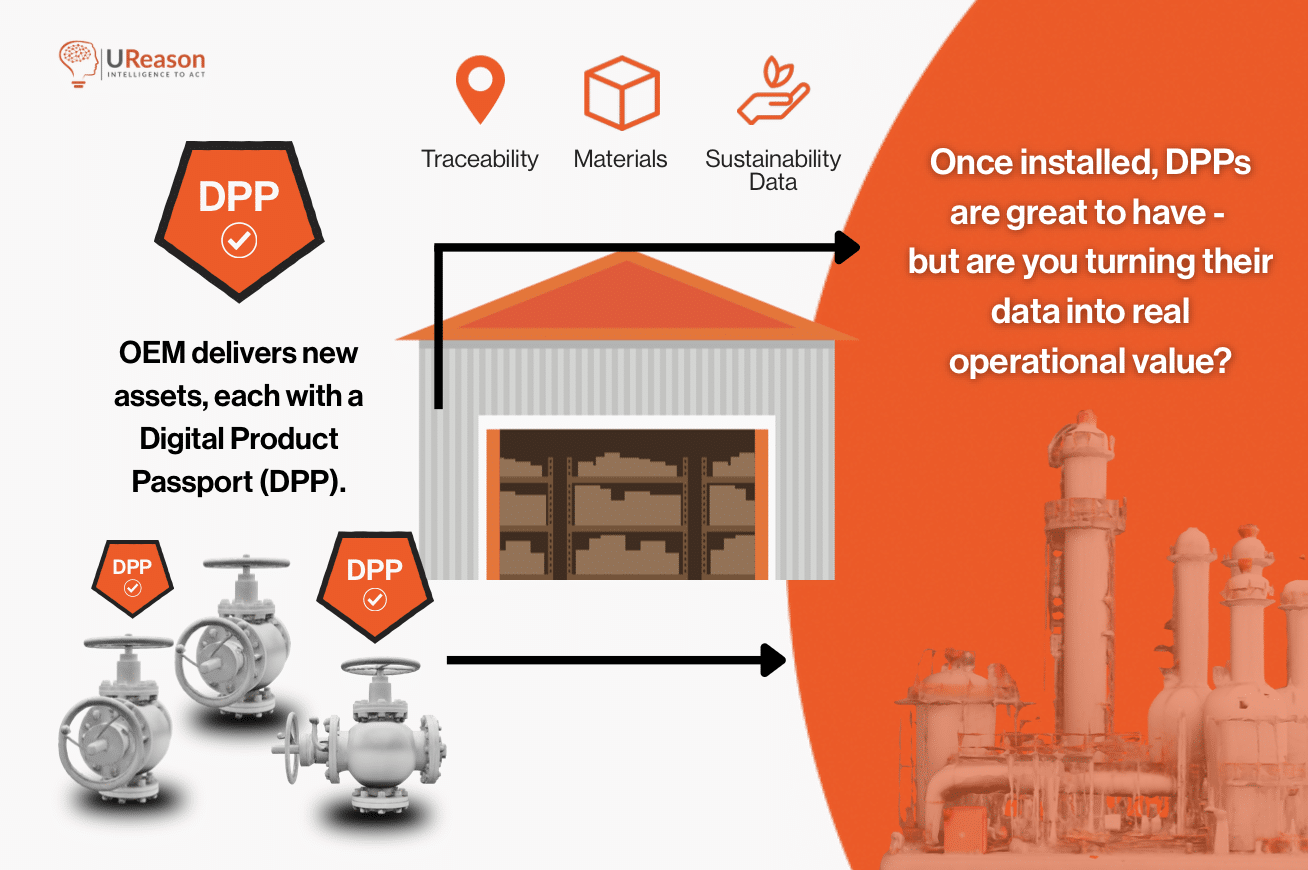
New Assets at Your Gate: What Changes When DPPs Arrive With Your Equipment
Traditionally, when new instrumentation, valves, heat exchangers, compressors, etc. arrive on site, they come with a stack of manuals, datasheets, and fragmented documentation — often in PDFs, spreadsheets, or paper form. That means manual effort to interpret, re-enter, and manage information.
With a Digital Product Passport accompanying the asset, the game changes:
Structured Digital Data Arrives First — no more chasing manuals.
Semantic Understanding Across Systems — ERP, EAM/CMMS, and digital twins can meaningfully interpret the information.
Traceability, Compliance, and Lifecycle Metadata Built In — from design specs to certificates and service history.
This capability isn’t just convenience — it catalyzes a data-driven plant.
What Exactly Is in a Digital Product Passport?
At the heart of modern DPPs is a standardized information model. One of the most promising formats for this is based on the Asset Administration Shell (AAS) — a structure that lets OEMs and operators share rich, modular data.
An Asset Administration Shell organizes data into submodels — each focused on a particular aspect of the asset’s identity, behaviour, or lifecycle. Typical AAS submodels that an OEM might* supply include:
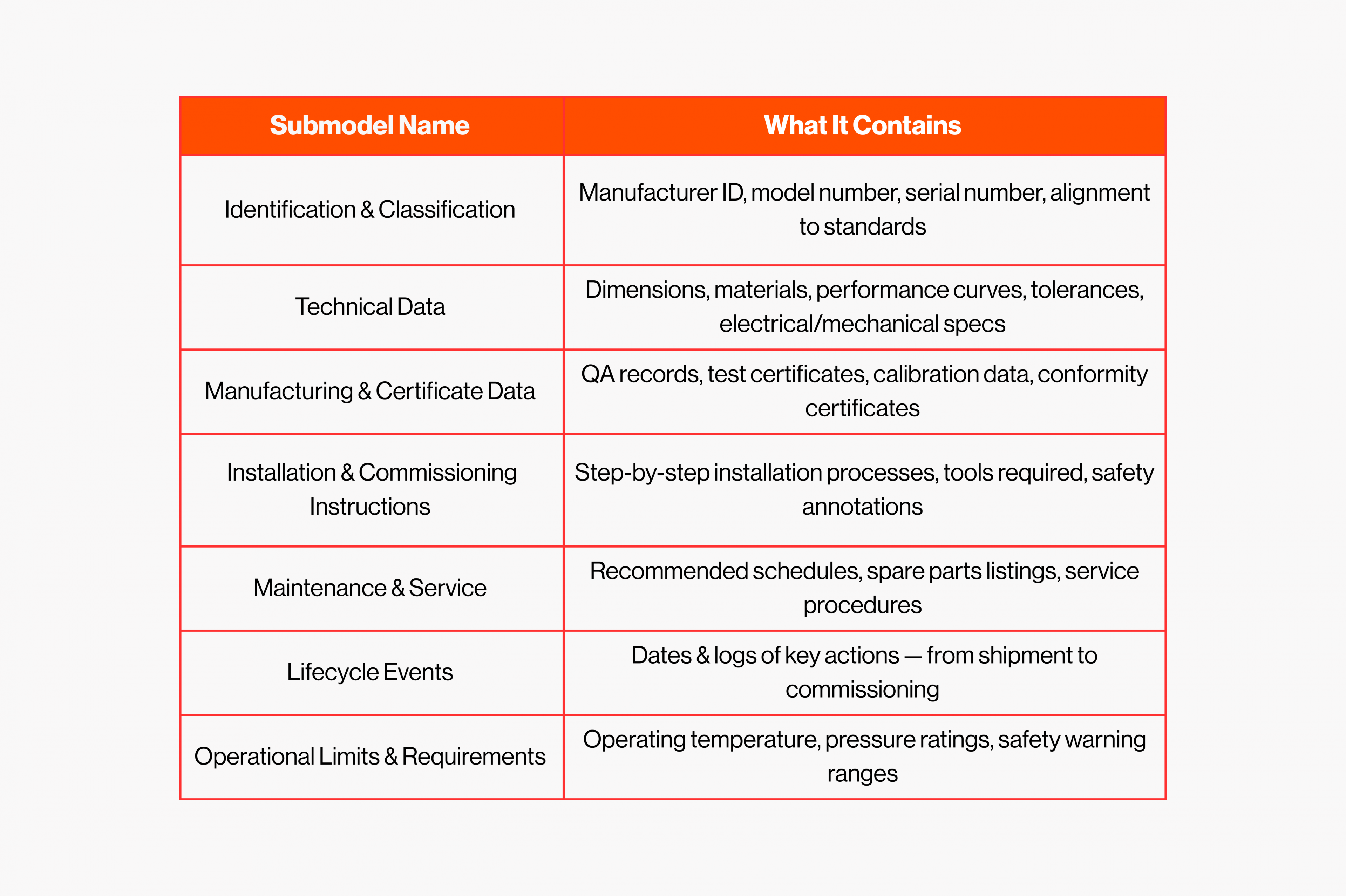
In practice, this means your digital systems receive consistent, validated, machine-readable information that can drive workflows instead of languishing in binders.
They might include it in the AAS format as the ESPR does specify what should be included in the DPP but not how!
The Golden Opportunity: Consistent, Reliable Asset Information
For the process industry, the potential impact of DPPs is profound, it eliminates human error as there is no more manual transcription from PDF spec sheets into EAM/CMMS systems. Data flows electronically and with structure.
With reliable metadata, your EAM, and real-time Asset Performacne analytics platforms (like our APM Studio) can trust their inputs and produce better insights. Next to this, certifications, calibration data, and traceable histories are instantly available to auditors and engineers alike.
Whether equipment comes from OEM A or OEM B, if it implements AAS-based DPPs, your systems see a harmonized structure.The net result? Operators get clarity instead of chaos, and teams can focus on value-added work instead of wrestling with fragmented documentation.
But, what about all your existing brownfield assets? A legitimate question: new assets may come with rich digital passports, but what about the equipment already in the plant? The answer lies in bridging legacy assets into the same digital ecosystem.
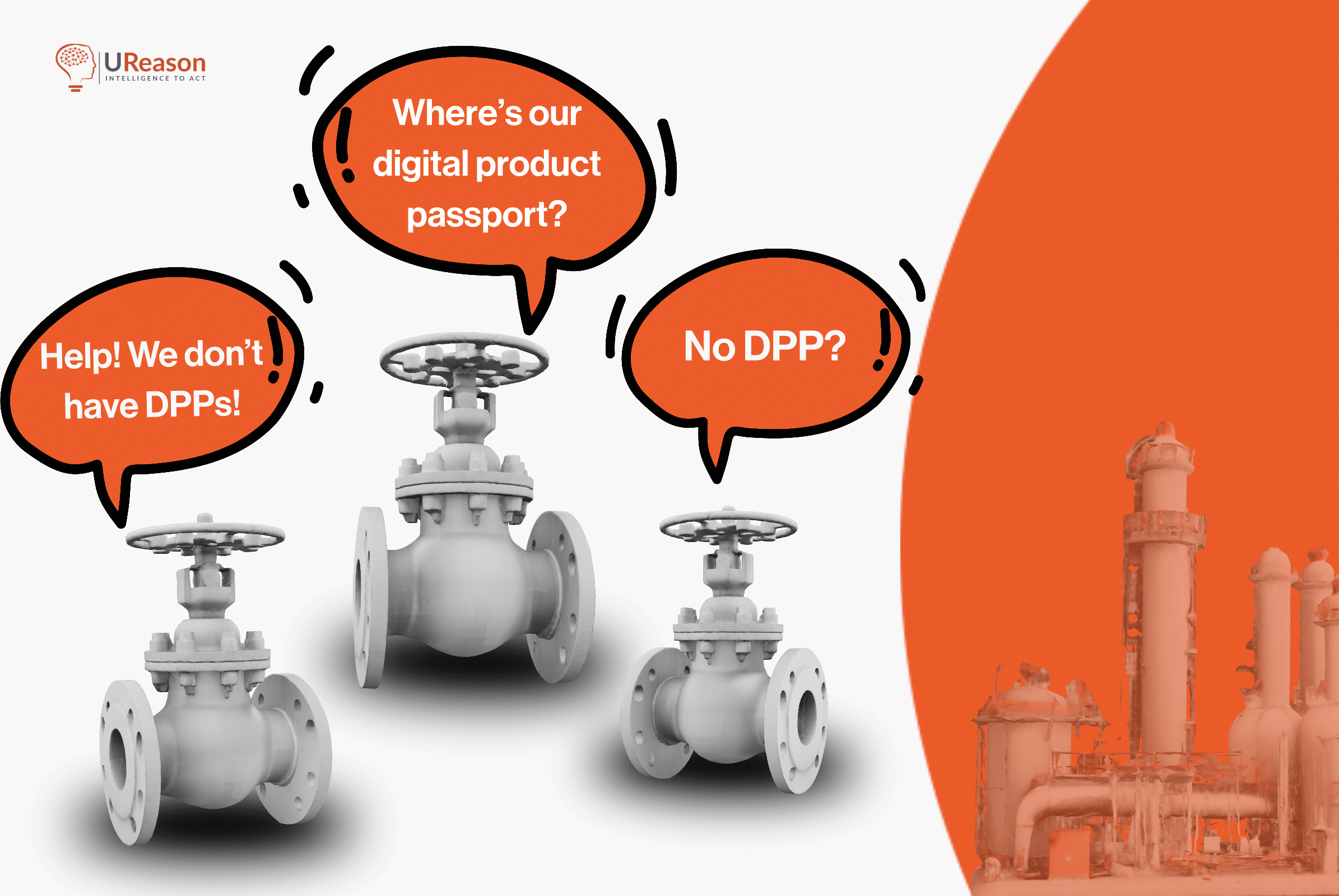
Introducing the UReason AAS Generator
For assets that don’t already come with an AAS or DPP, tools like the UReason AAS Generator make it possible to create high-quality AAS representations retrospectively.
The concept is simple but powerful:
- Take existing data from your plant systems — whether spreadsheets, EAM/CMMS entries or vendor PDFs — as input.
- Generate standardized AAS files that represent each asset in the same structure that OEMs provide.
- Ingest them into your digital systems just like new equipment, with consistent submodels for technical data, maintenance, lifecycles, and more.
Here’s an intro from the UReason team on how this works: https://www.youtube.com/watch?v=1Mix-qvwBlc

This capability means:
- You don’t only benefit from future DPP-enabled equipment — you uplift your entire plant digitally.
- Your brownfield assets gain parity with greenfield counterparts in workflows like predictive maintenance, digital twin modeling, procurement, and audits.
A Practical Path Forward
To realize these benefits, plants should consider, so your organization speaks the same data language:
- Requiring an AAS DPP delivery from OEMs in procurement contracts — make it a standard deliverable (remember the ESPR doesn’t define the format).
- Establishing ingestion pipelines into EAM, digital twin, and analytics applications — automated data flows beat manual updates.
- Using tools like the UReason AAS Generator— don’t wait for OEMs or time-consuming manual modelling.
- Training engineering and data teams on AAS submodels and governance.
The Bottom Line
Digital Product Passports — structured, machine-readable profiles of equipment — are more than documentation: they are fuel for digital transformation.
For process industry the implications are dramatic:
- Cleaner, standardized asset information
- Faster commissioning and safer operation
- Better maintenance outcomes and predictive insight
- Simplified compliance and audit readiness
And with tools to generate AAS for brownfield assets, the digital advantages aren’t limited to new equipment — they extend across your entire plant asset base.
Prepare early for Digital Product Passports
OEMs that act early on ESPR and DPPs can turn compliance into commercial value. Schedule a call with Artur Loorpuu, Senior Solutions Engineer in Digitalization, to see how your existing product documentation can be used to generate DPPs and build a robust data foundation for future delegated acts.