For decades, control valve diagnostics lived inside the PI historian — siloed, site-specific, and laborious to scale. Today, cloud-native platforms like UReason’s Control Valve App on AVEVA CONNECT are rewriting the rules. Here’s why the shift is inevitable, and why the organisations that move first will gain the largest operational advantage. 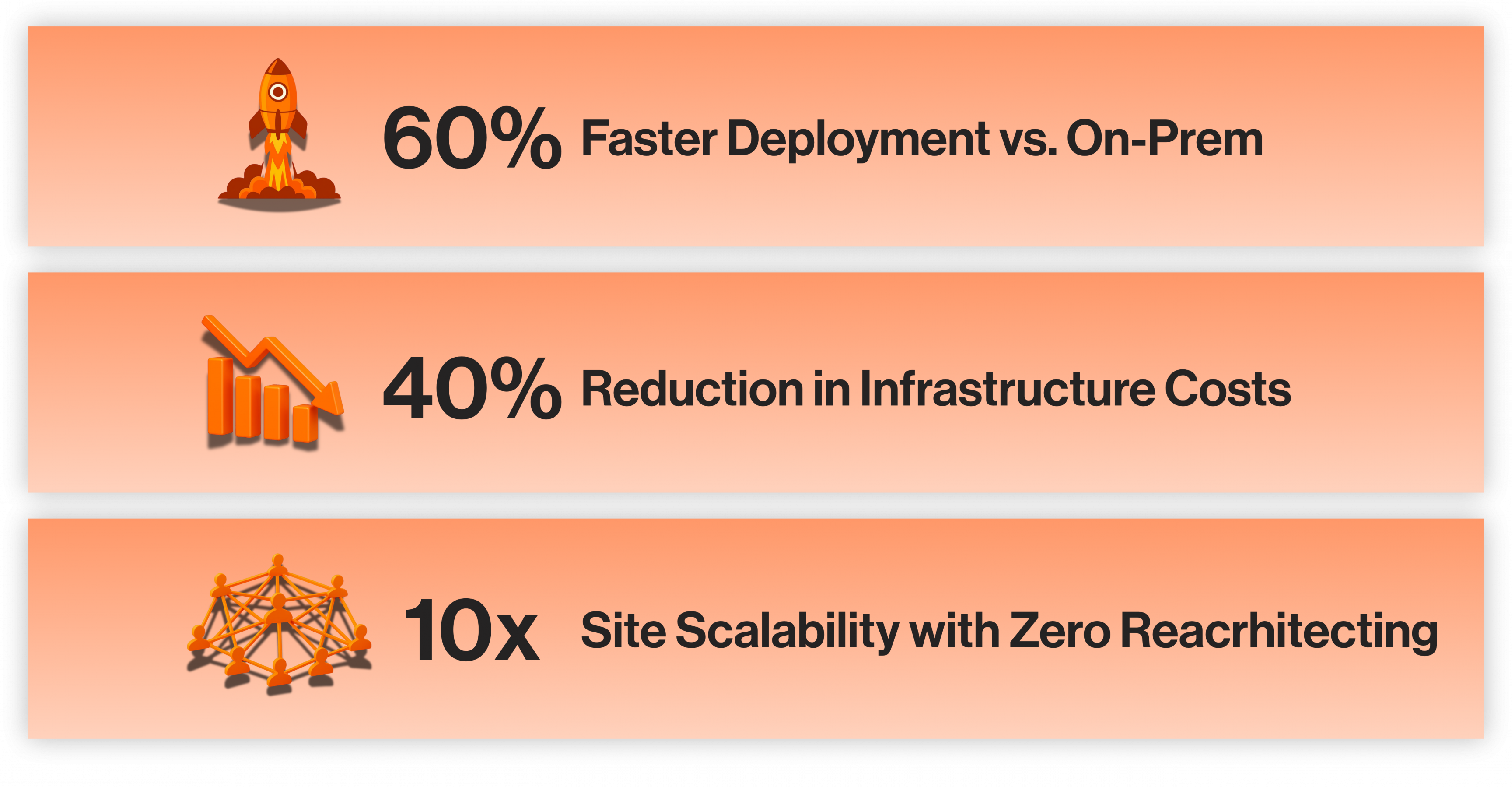
The Landscape: A Problem That Doesn’t Scale Well On-Prem
Control valves are among the most failure-prone assets in any process plant. Sticky stems, excessive hysteresis, packing wear, and positioner drift quietly erode loop performance — costing energy, throughput, and product quality long before a trip occurs. Traditional analytics approaches address this at the site level: a local PI server ingests valve data, a bespoke analytics layer processes it, and engineers spend hours interpreting outputs that only cover their own facility.
This model has served the industry, but it was designed for a world of isolated plants. As portfolios grow, sustainability targets tighten, and remote operations become the norm, the on-prem architecture increasingly becomes the bottleneck rather than the enabler.
Scalability: AVEVA CONNECT vs. the PI-Only Architecture
The most fundamental limitation of traditional PI-only analytics is that scalability is essentially linear: every new site needs its own server, its own licenses, its own maintenance schedule, and its own local expertise. Doubling your plant count means roughly doubling your infrastructure costs and your IT burden.
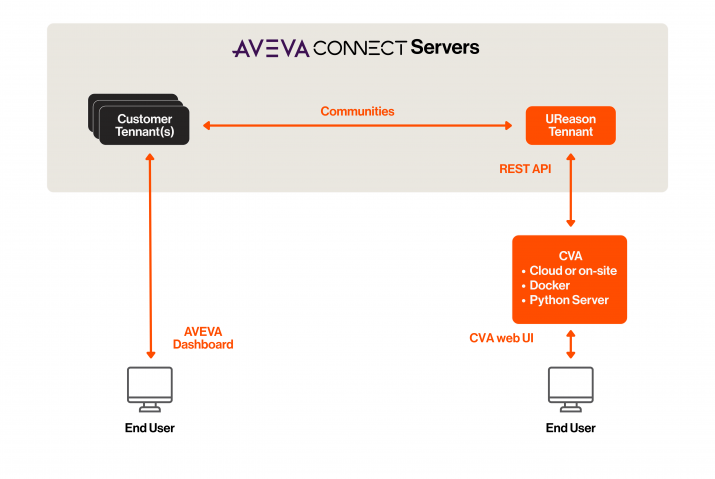
AVEVA CONNECT breaks that linearity entirely. Because UReason’s Control Valve App runs natively on CONNECT, the platform infrastructure is shared across all connected sites. Adding a new facility means connecting its data source and activating the app — not provisioning new hardware, not shipping servers, not weeks of environment setup.
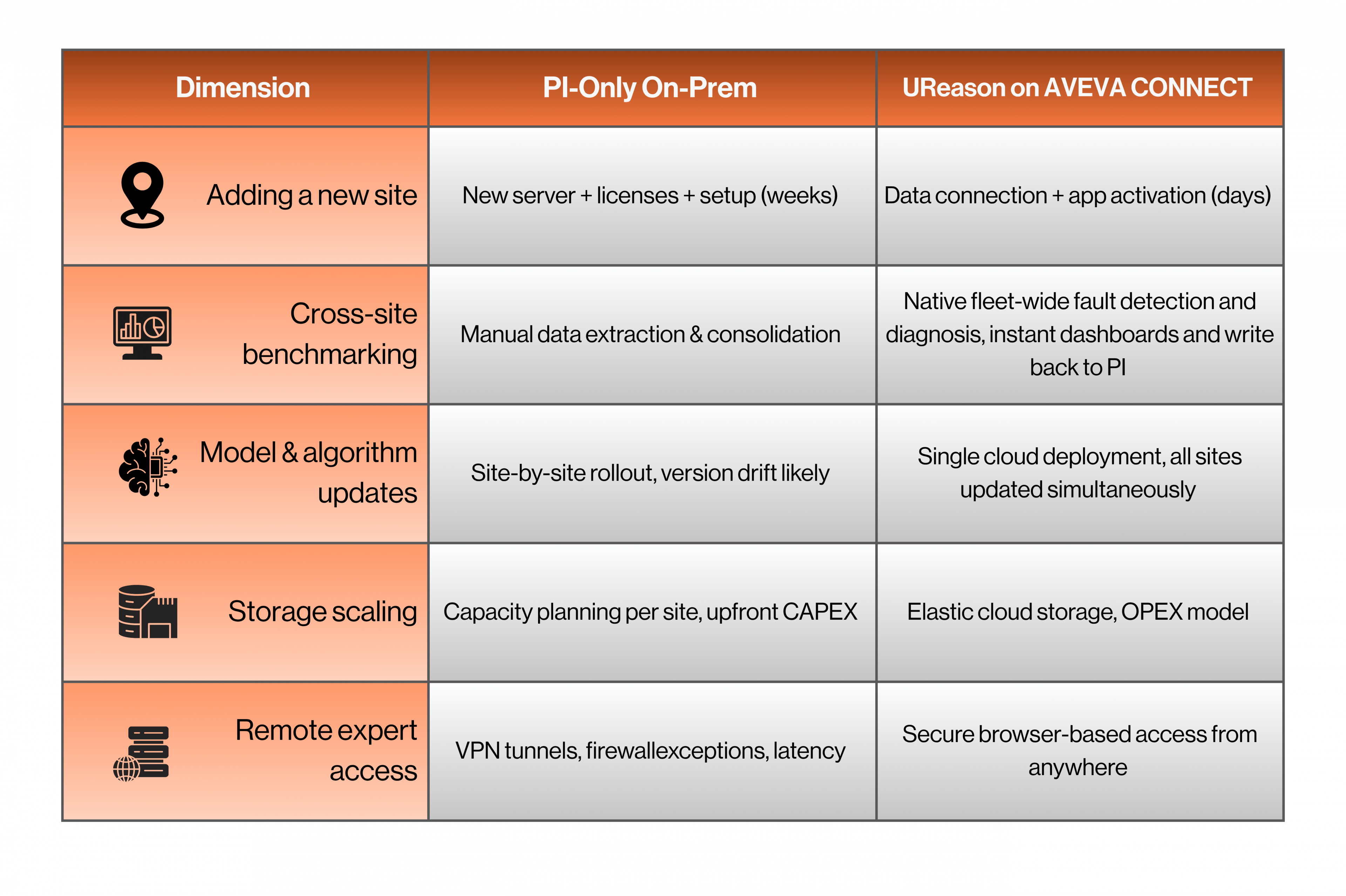 This difference compounds over time. A portfolio operating 15 plants on a PI-only model faces 15 parallel maintenance cycles, 15 separate upgrade projects, and 15 opportunities for version drift. On CONNECT, the same portfolio operates as a single analytical organism — and fleet-level insights (which valves across your entire estate are trending toward failure?) become trivially accessible rather than a major integration project.
Deployment Speed: From Months to Days — Across Every Site
Ask any reliability engineer how long a traditional on-prem analytics rollout takes and the honest answer is rarely measured in weeks. Hardware procurement, IT security reviews, OS hardening, historian integration testing, historian tag mapping — each step adds calendar time, and each step must be repeated in full at every new site.
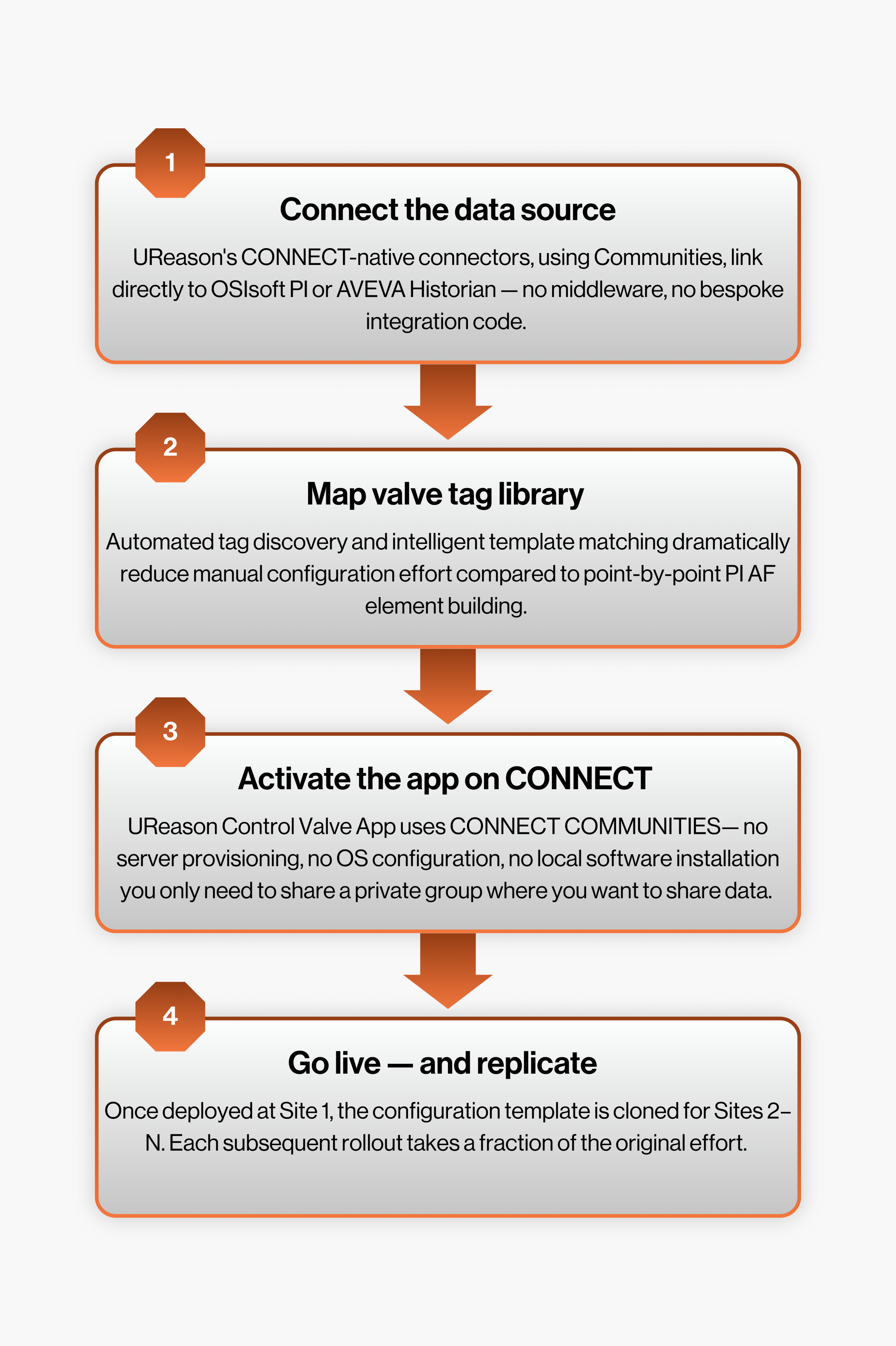
This templated, cloud-managed deployment model is what makes fleet-wide rollouts credible. Organisations that have historically considered enterprise-scale valve analytics “too complex to standardise” find that CONNECT removes the friction that made standardisation expensive.
Cost Structure: Reduced Infrastructure & Maintenance Burden
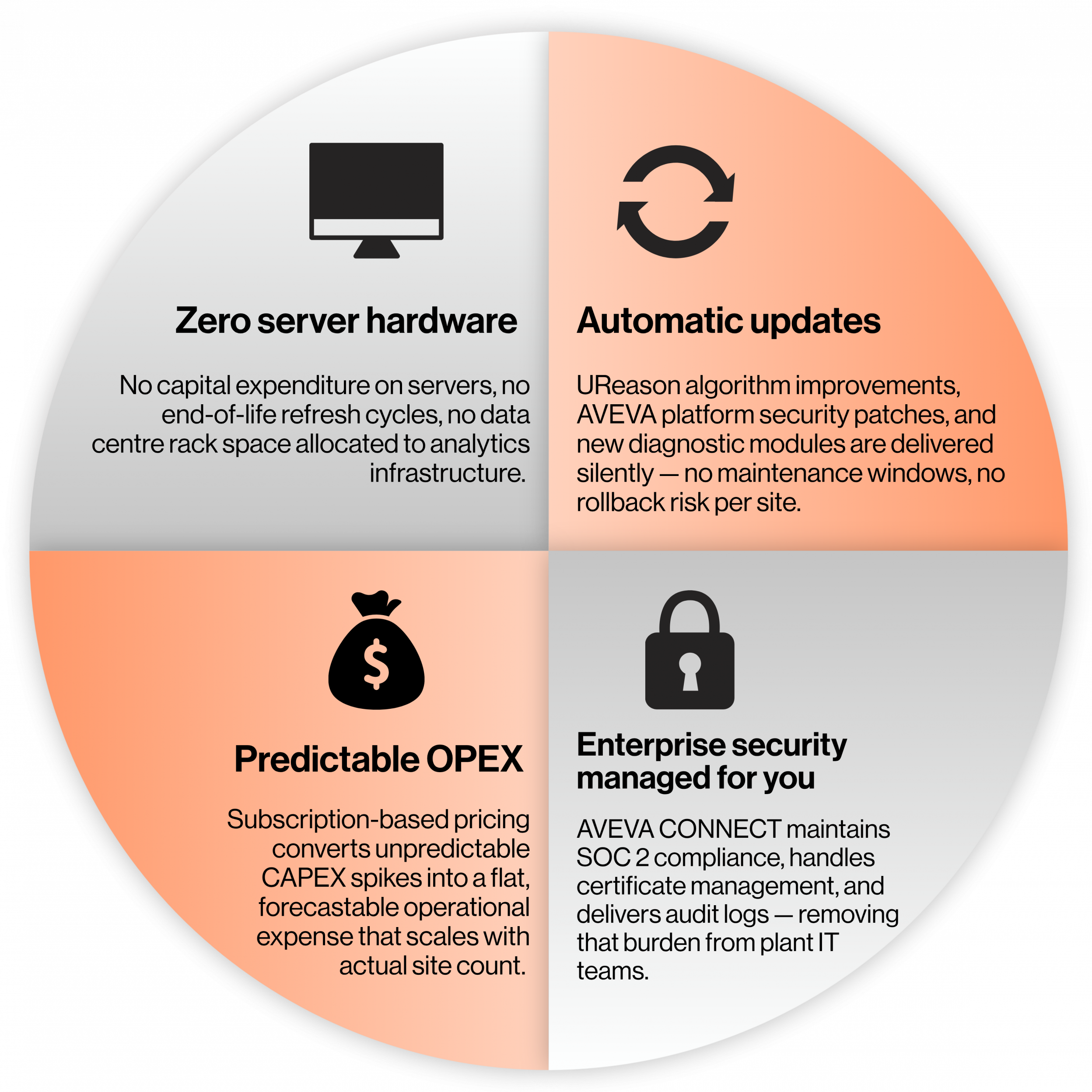
On-prem analytics carry a hidden cost iceberg. The visible part — server hardware, software licenses — is real but manageable. Below the waterline sits the larger mass: power and cooling, OS patching, database maintenance, backup management, disaster recovery planning, and the specialist IT time consumed by all of the above. For a 10-site portfolio, that iceberg is substantial.
Analytical Power: Fleet Intelligence That On-Prem Simply Cannot Deliver
Even setting aside infrastructure economics, cloud-native architecture enables a category of analytics that is structurally impossible with isolated on-prem systems: fleet-level intelligence. UReason’s Control Valve App, running centrally on CONNECT, can simultaneously monitor thousands of valves across dozens of sites and surface insights that no single-site system could generate.
Fleet benchmarking, anomaly correlation across similar process units, and shared failure-mode libraries all become available when analytics are centralised. Reliability engineers at Corporate can see a real-time health score for every valve in the portfolio from a single dashboard — without needing access credentials for 12 different PI Vision servers or conducting a monthly manual data pull.
Resilience & Availability: Cloud Uptime vs. Plant Server Reality
On-prem analytics servers live in industrial environments: power fluctuations, temperature extremes, limited UPS capacity, and stretched IT teams who cannot respond to an analytics server outage at 2am with the same urgency as a production DCS alarm. In practice, on-prem analytics systems experience unplanned downtime that goes untracked precisely because no production system depends on them directly — until the reliability team needs three months of data that was never collected.
AVEVA CONNECT operates on hyperscale cloud infrastructure with 99.9%+ availability SLAs, automated failover, geographic redundancy, and continuous monitoring — capabilities that would require significant dedicated investment to replicate on-prem. For UReason’s Control Valve App, this means continuous data ingestion, uninterrupted diagnostics, and audit-grade data retention without any plant-side infrastructure dependency.
The Talent Equation: Centralising Expertise Instead of Duplicating It
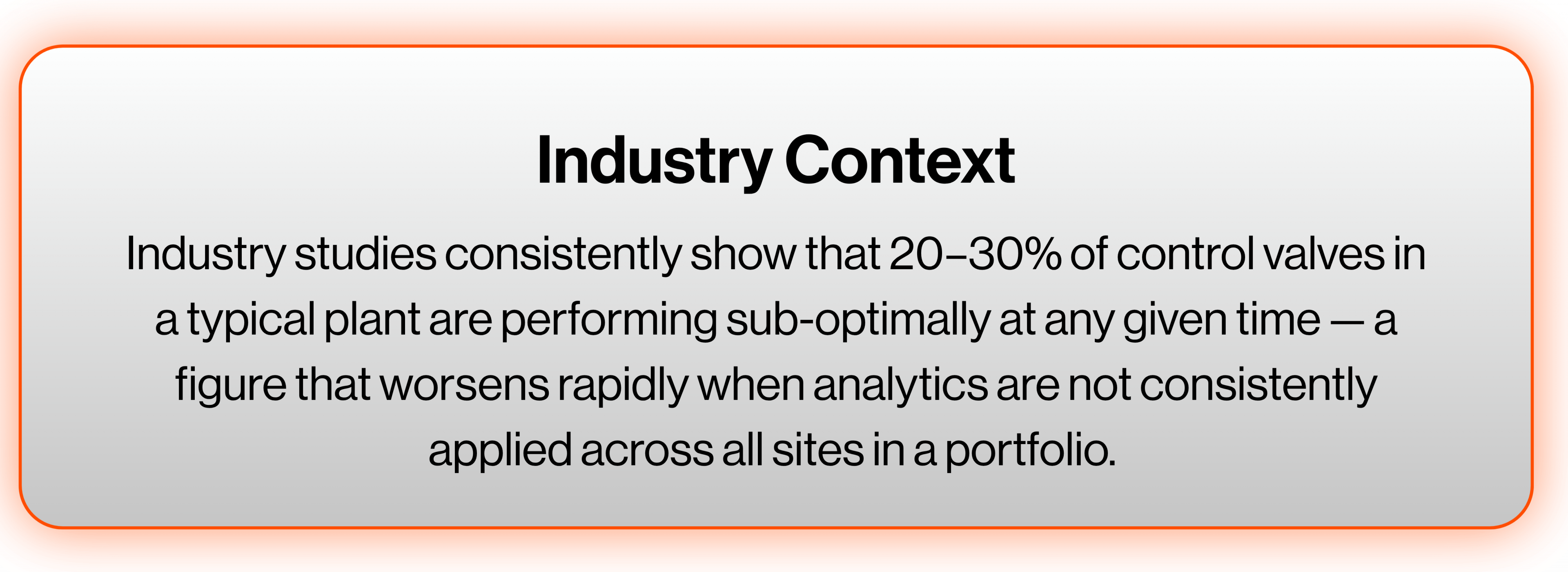
On-prem analytics demands that every site has enough local expertise to configure, maintain, and interpret the system. In an era of tightening engineering talent markets, this requirement effectively limits analytics deployment to plants that already have strong reliability engineering benches — leaving smaller or newer sites underserved.
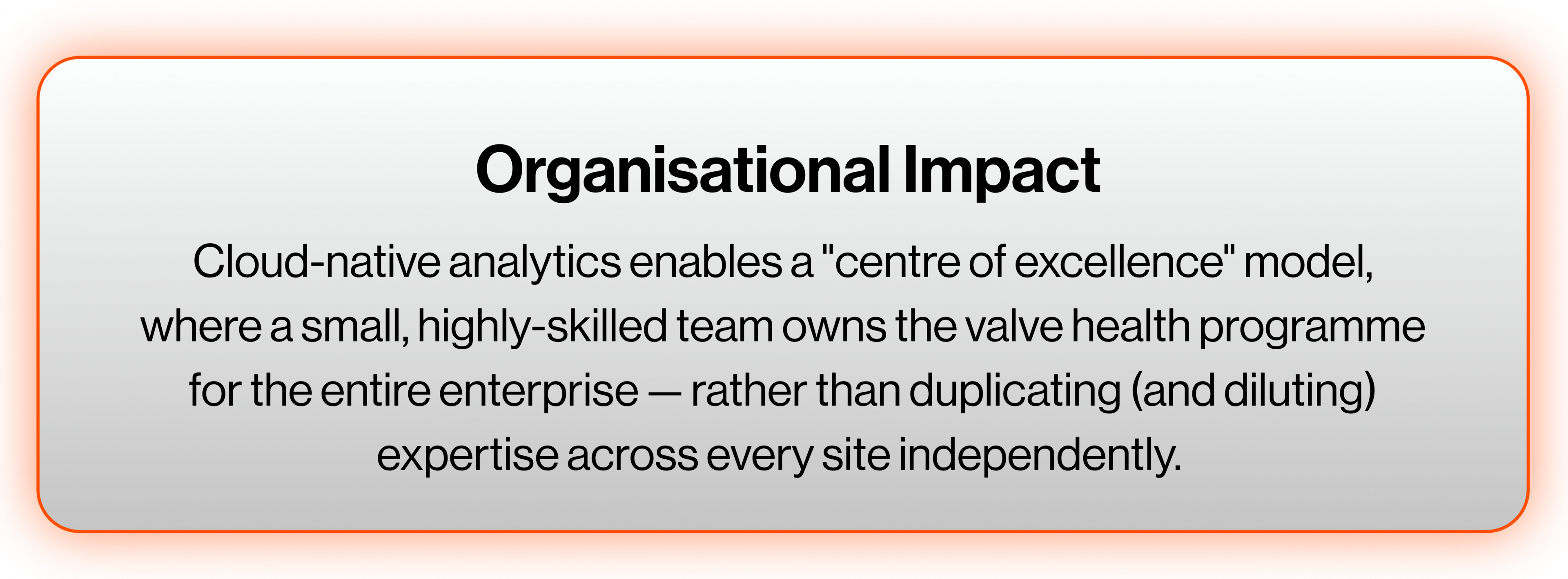
Cloud-native deployment inverts this model. A single expert team — whether internal reliability engineers at Corporate or UReason specialists — can manage configuration and interpretation for the entire fleet from one location. Smaller sites that could never justify a dedicated analytics engineer gain access to the same diagnostic capability as the flagship refinery.

Integration & Ecosystem: CONNECT as an Analytical Hub, Not an Island
UReason’s Control Valve App doesn’t exist in isolation on AVEVA CONNECT — it operates within a broader ecosystem of asset performance management, operations data, and enterprise workflows. Integration with AVEVA’s Unified Operations Centre, work order systems via API, and notification services means that a valve health alert can automatically trigger a maintenance work order in SAP PM or Maximo, notify the right engineer via Teams or email, and appear on a unified asset health dashboard — all without bespoke integration code.
On-prem PI-based systems can be integrated similarly, but each integration is a custom engineering project. On CONNECT, these connectors are maintained by AVEVA and UReason, reducing both the initial integration effort and the long-term cost of keeping integrations functional as upstream systems change.
Final Word: The On-Prem Era of Control Valve Analytics Is Ending
The case for cloud-native control valve analytics isn’t theoretical — it’s a compound argument from scalability, economics, deployment speed, analytical depth, system resilience, and talent strategy. Every one of these vectors favours AVEVA CONNECT over isolated PI-only architectures.
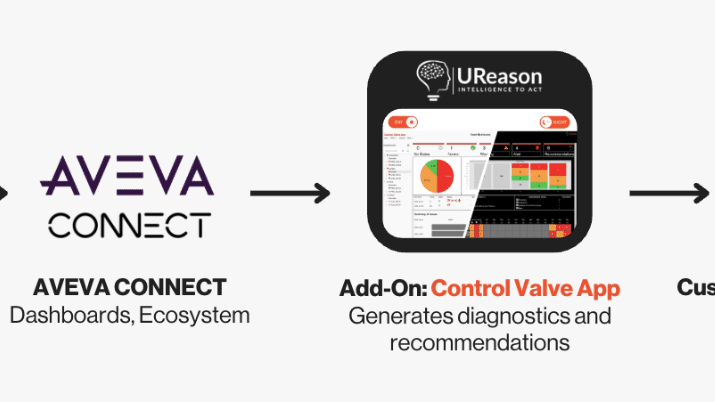
UReason’s Control Valve App is built to take full advantage of this architecture. It delivers pre-built diagnostic intelligence — hysteresis detection, stick-slip analysis, positioner fault classification, and more — through a platform that connects your entire fleet, deploys in days not months, and requires zero on-site server infrastructure to maintain.
The organisations winning on asset reliability in the next decade won’t be those with the most sophisticated PI implementations at individual sites. They’ll be the ones who turned their fleet into a single, continuously learning analytical system — and the cloud is the only architecture that makes that possible.
Explore How to Turn AVEVA PI Data into Actionable Insights
Contact us today to try the Control Valve App on AVEVA™ CONNECT and see how early issue detection can transform your control valve monitoring and turnaround preparation. Schedule a call with Florian, Solutions Engineering, Data Science & Digitization, to learn more.
Industrial data is only powerful when it’s accessible — now is the time to make it work harder for you.