
Home/Resources/Article/P&ID & Process Insights
By Priyank Venkatesh
The Question Every Engineer Asks
“Where does this line go? What feeds into this vessel? If I isolate here, what goes down with it?” Every engineer has asked some version of this. It comes up during walkdowns, incident response, FMEA sessions, turnaround planning.
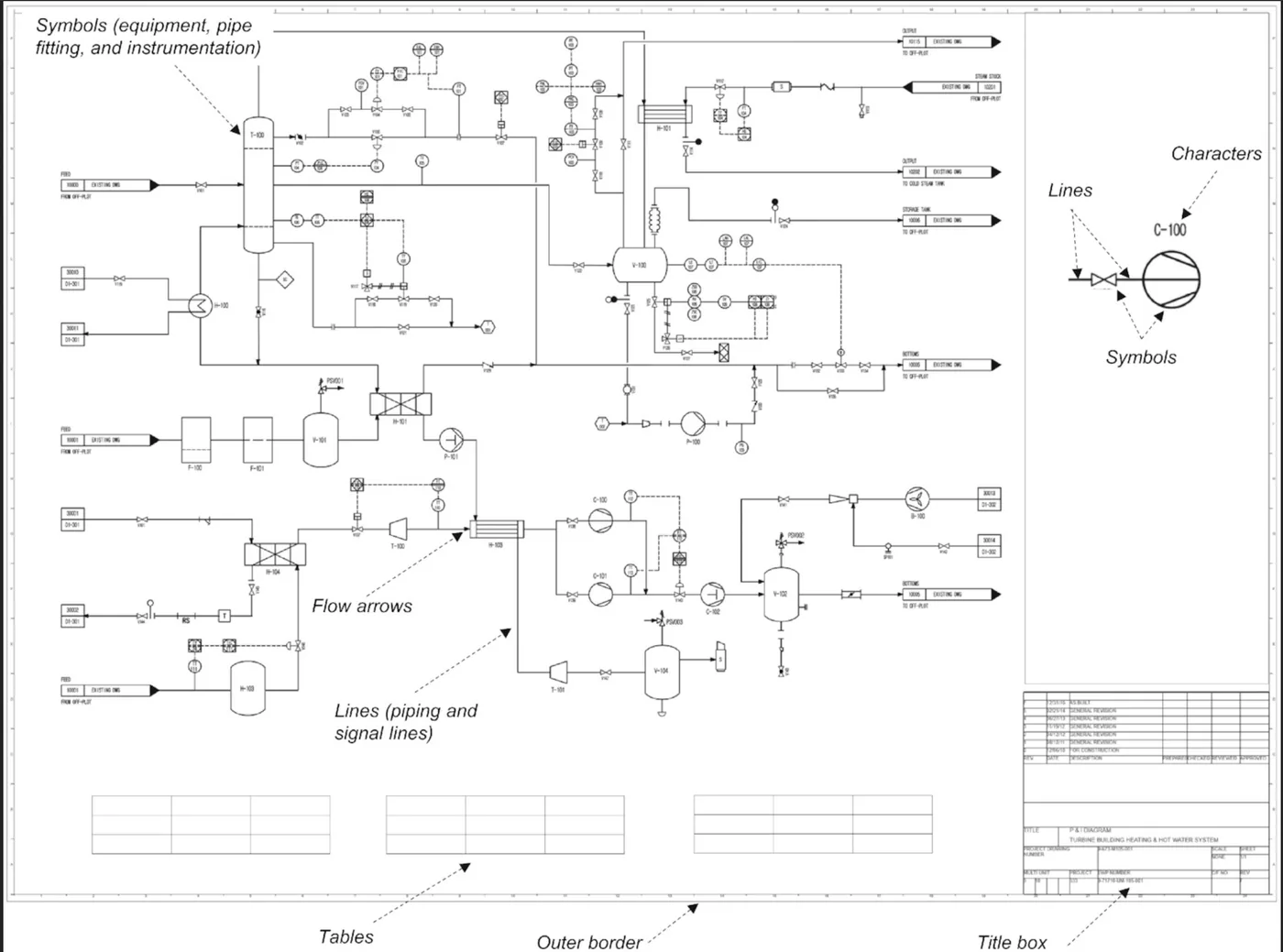
The frustrating part isn’t that the answer is hard to find. The P&ID has it. The line you’re looking at connects to other lines, feeds vessels, passes through valves and instruments. It’s all there in the drawing. The problem is getting it out. That means flipping between sheets, cross-referencing tag lists, holding a mental map of the plant while you trace.
If you already know the plant, this will take time. If you don’t, whether you’re a junior engineer, a contractor, or someone new to the area, you stop and ask someone who does.
The Expert Problem
Plant knowledge today lives in two places: the drawings and the heads of senior engineers. Neither is as reliable as it looks. Drawings drift from reality as modifications accumulate. Senior engineers retire, transfer, or simply aren’t available when the question comes up at 2am during an incident. Knowledge that lives only in people walks out the door when they do.
The consequence is predictable. Junior engineers make assumptions that add unnecessary scope to outages. Incident investigations slow down because establishing what was upstream of the failure takes time. FMEA sessions take longer because mapping equipment connections require manual work before analysis can begin.
Process Insights doesn’t pretend the drawings are perfect. When connectivity is incomplete or ambiguous, the system flags it. Engineers see not just what the graph knows, but where it runs out, and that turns out to be just as useful.
Process Insights doesn’t replace the engineer’s judgement. It just means they don’t have to wait for the most experienced person in the room before they can act. That’s the gap Process Insights is built to close.
The Same Question, Answered Differently
Process Insights works from two inputs: a DEXPI XML export and the SVG diagram engineers already use.
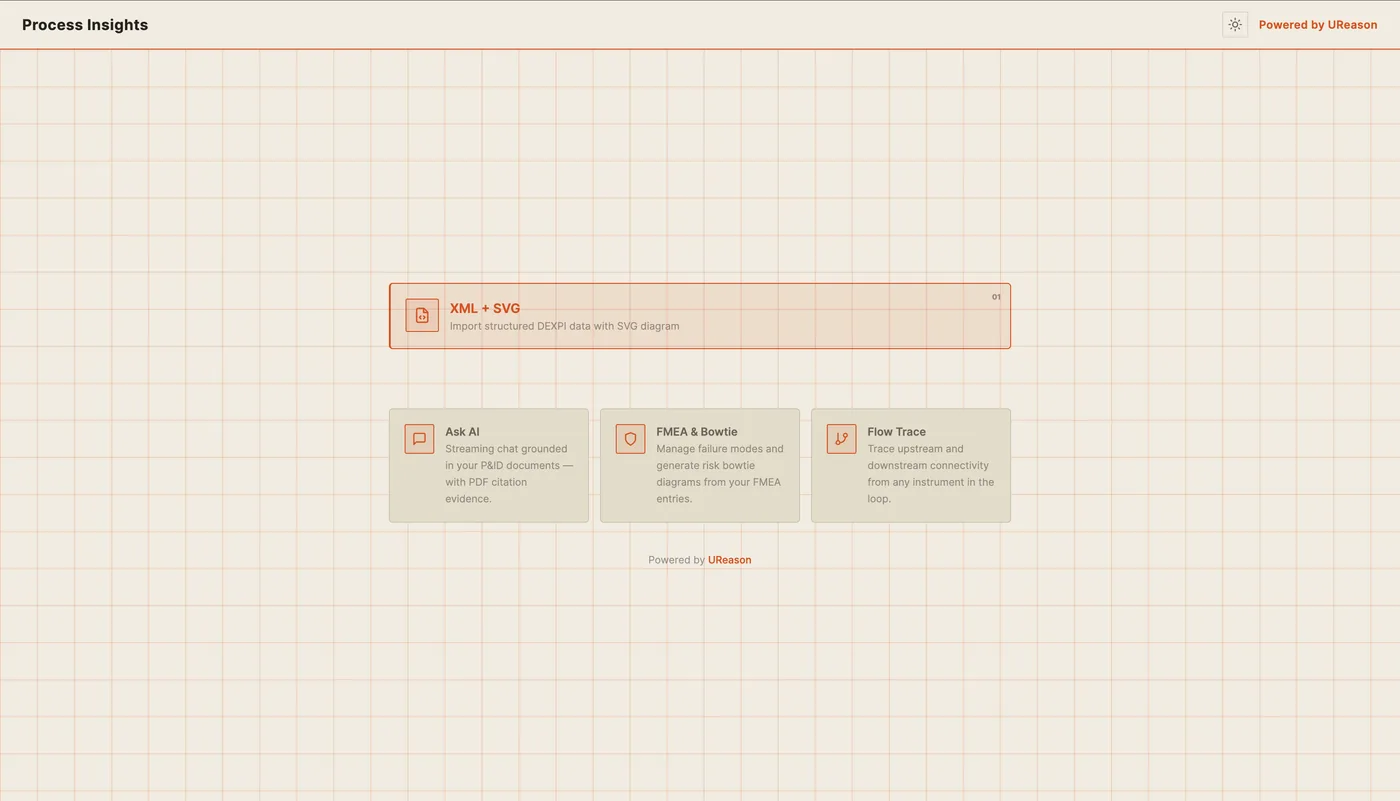
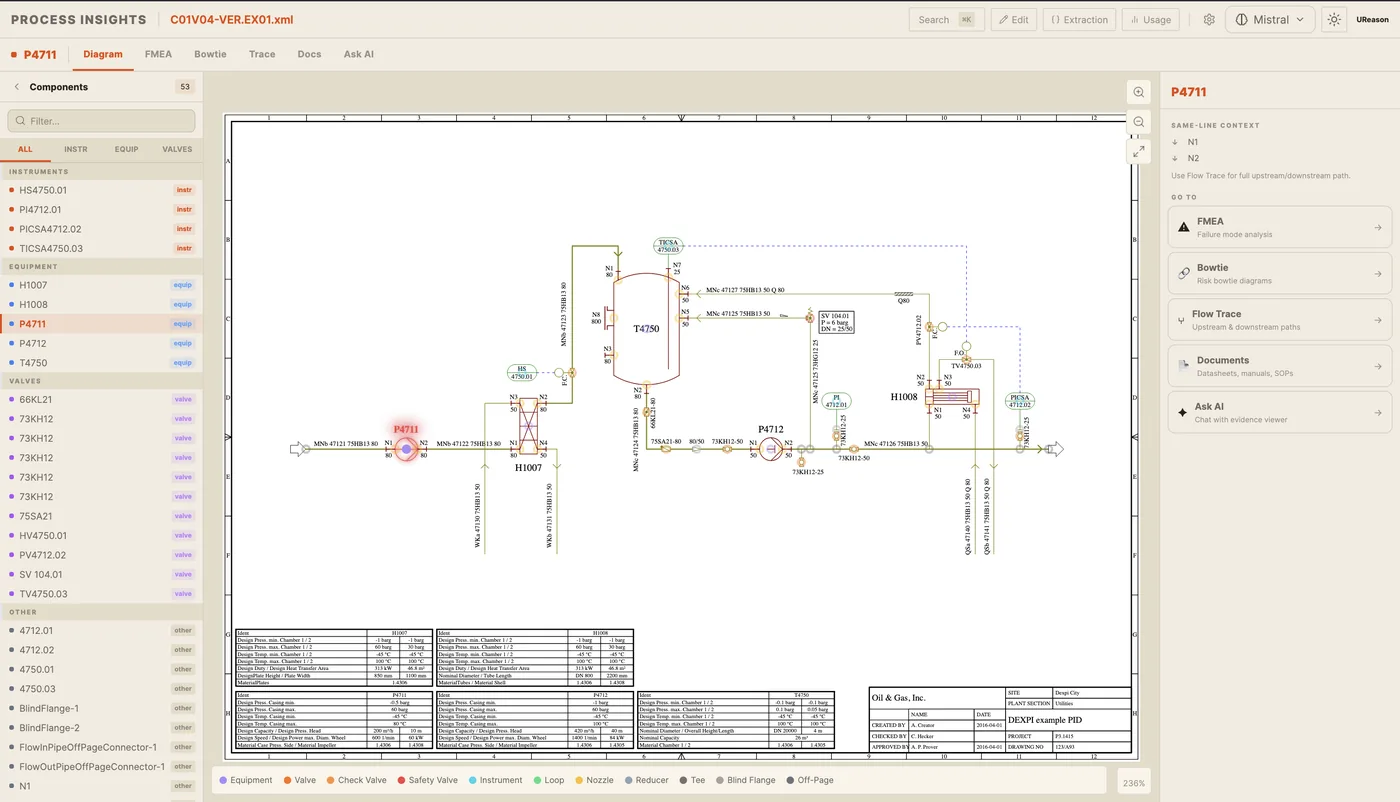
From there the platform has several tabs from which a user can interact with the tool and their respective P&ID:
- Trace tab allows you to examine up/downstream connections
- FMEA and Bowtie apply that same connectivity to failure analysis, building bowties straight from your FMEA tables.
- Ask AI lets engineers query their P&ID documents in plain language and get answers with source references.
- Docs keep datasheets, manuals, and SOPs attached to the components they belong to.
Once uploaded, the use sees three distinct panels: on the left, a component panel lists every instrument, piece of equipment, and valve on the sheet. Click an instrument or valve in the diagram,and the right-hand panel surfaces its context: same-line neighbours, nozzle connections, quick links to the FMEA view, the Bowtie, and the upstream and downstream trace. Everything stays anchored to the drawing.
Here’s what it looks like in practice. The engineer selects H1007 and clicks Trace. Within seconds the diagram lights up: upstream sources, downstream equipment; the pipe runs between them. Everything that matters to that isolation decision, highlighted in place. No flipping between sheets. No tag list. No tapping someone on the shoulder to ask them where something is. The diagram didn’t change. The knowledge was always there. What changed is how fast you can reach it.
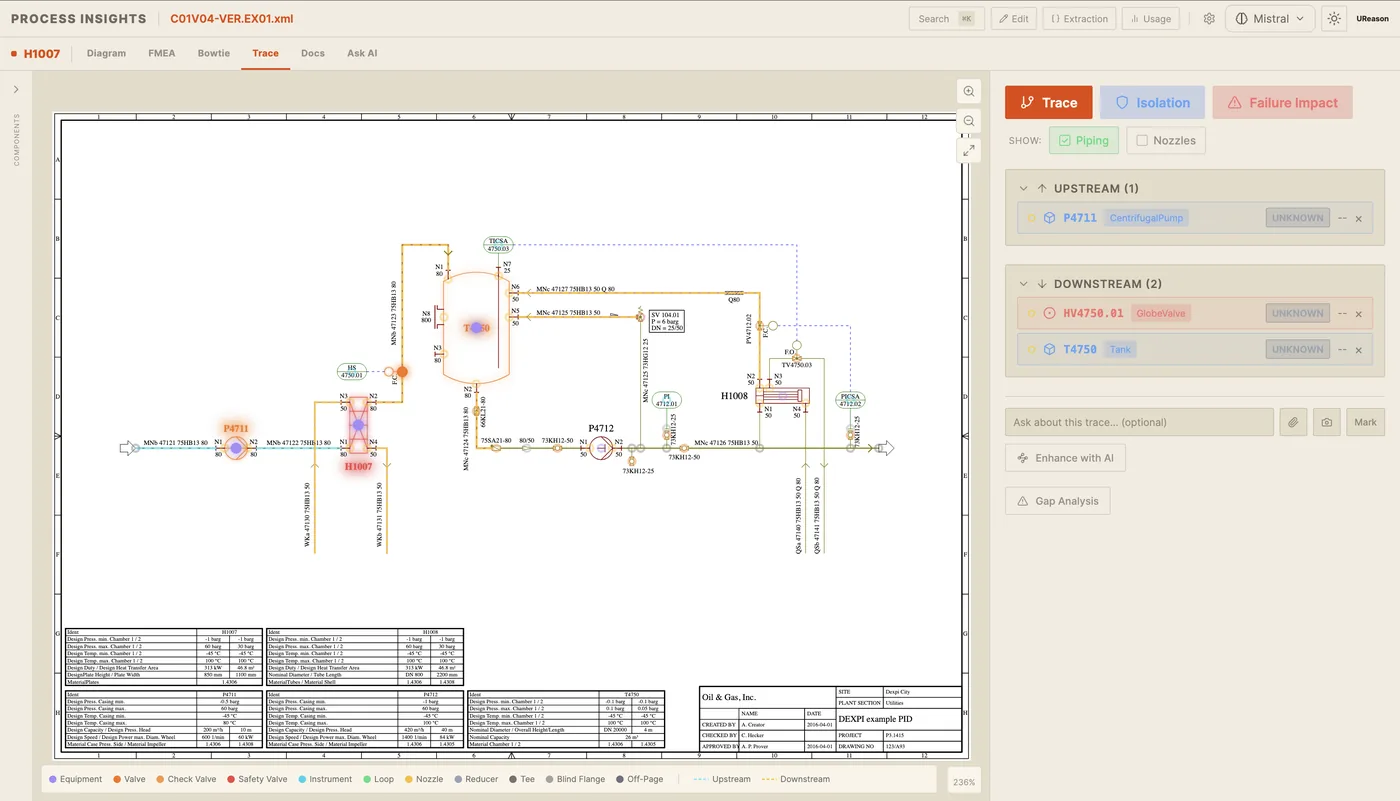
The engineer who used to spend two hours tracing a line now has the answer in seconds.
Find Process Impact in Seconds
Book a call with Priyank Venkatesh to explore how Process Insights transforms static P&IDs into interactive engineering systems for troubleshooting and FMEA workflows.